


BULK / SPECIFIC VOLUME
Thickness and structure
Potential for inner board layers, divider sheets and protective materials. Assessed for sheet thickness, stiffness and cohesion.
 Contact us
02 / TECNOFIBER
Cellulosic raw material for paper mills and material converters.
TecnoFiber is made by recovering fibre from liner. Its potential is assessed against the formulation, equipment and properties required of the finished product.
Request technical data sheetDiscuss an industrial trial →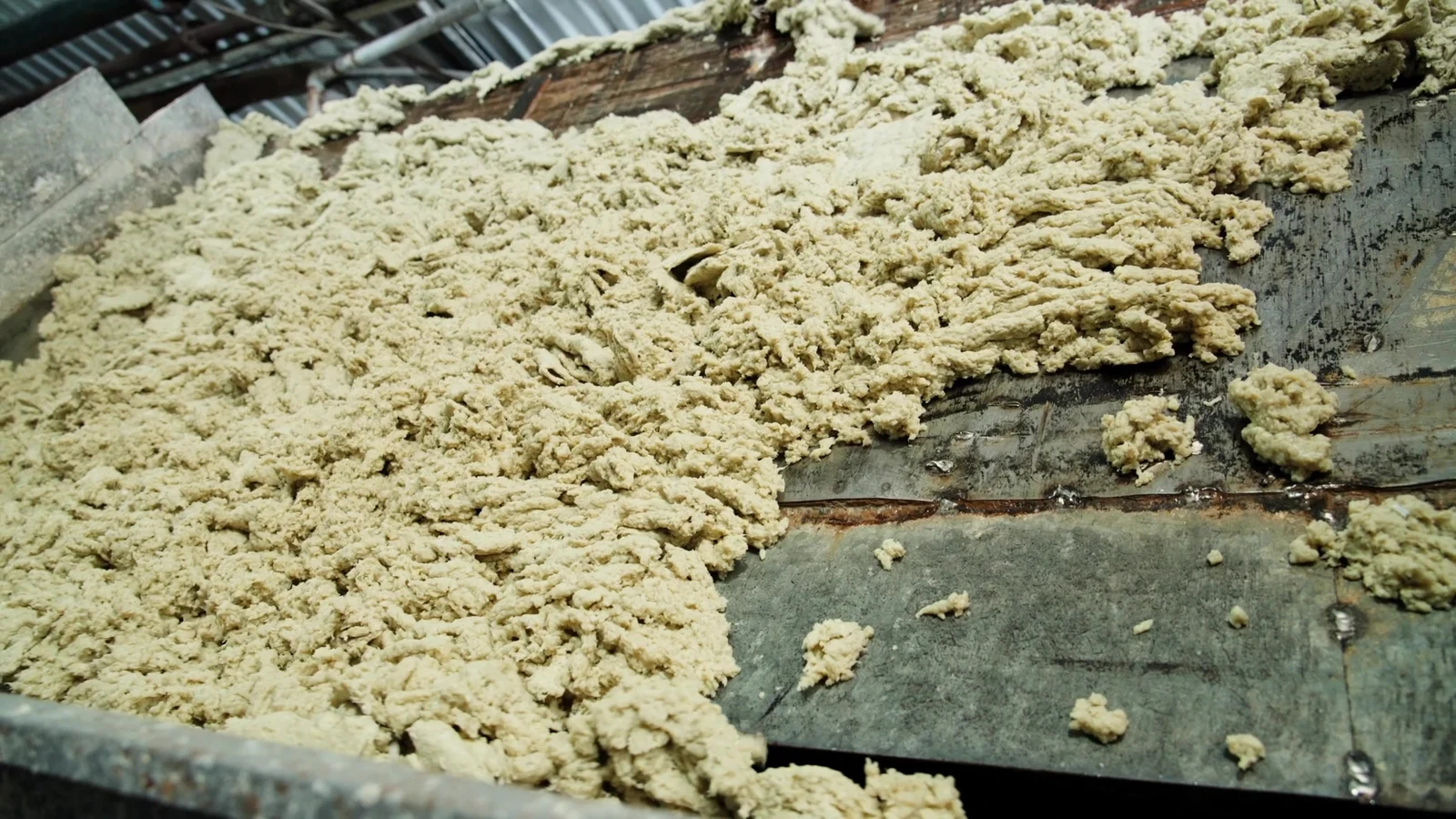
FROM LINER TO RAW MATERIAL
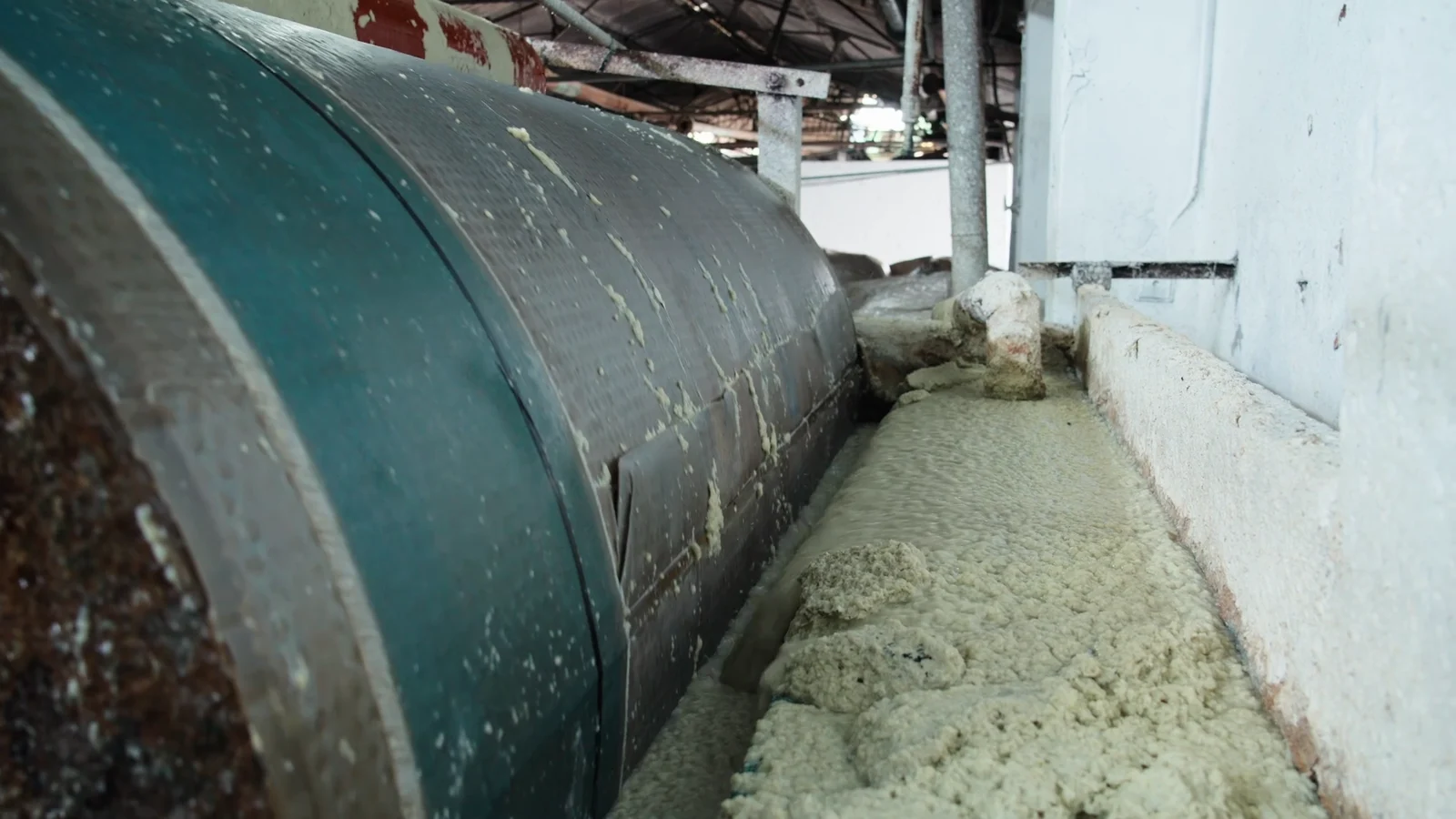
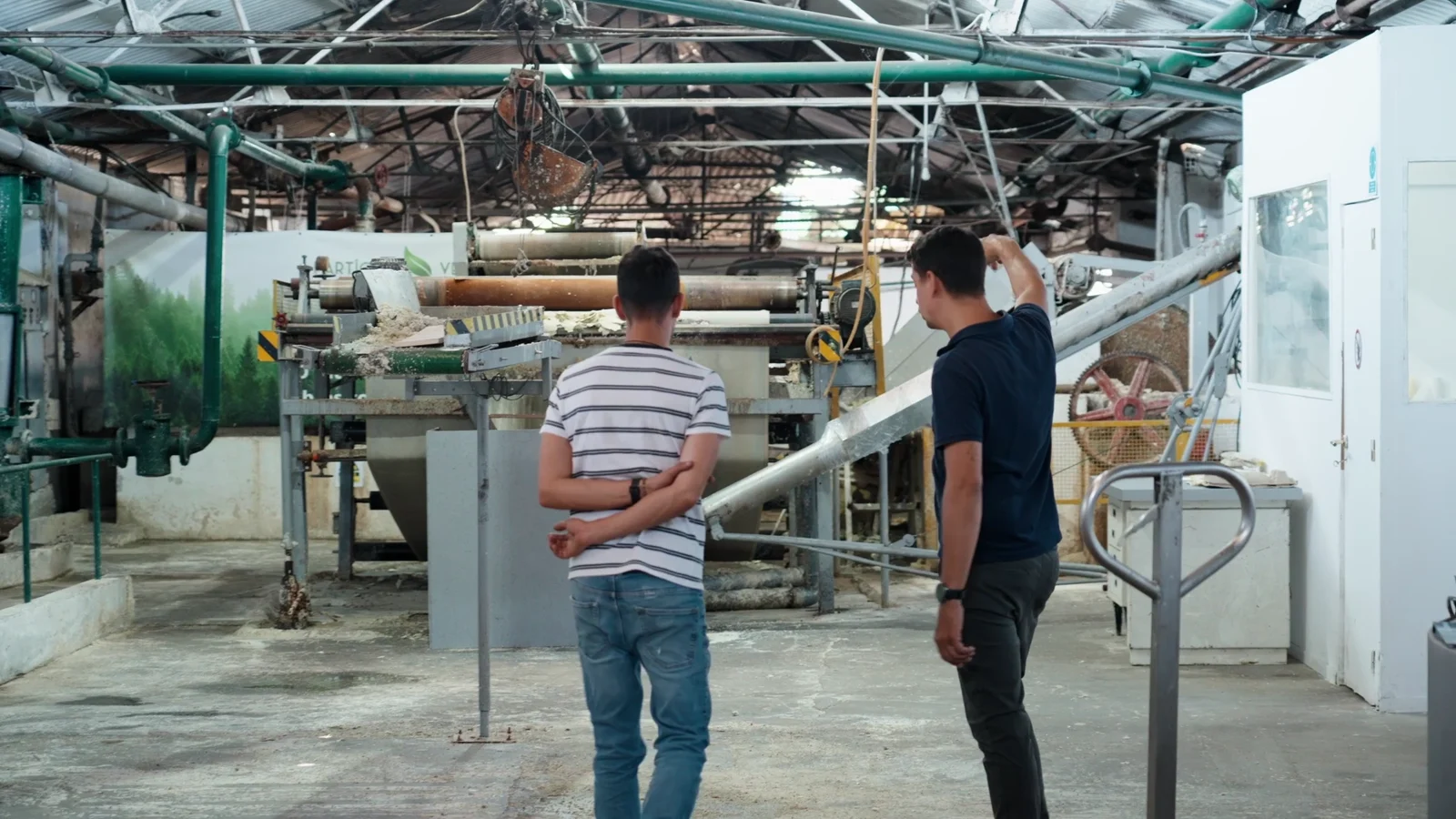
Treatment in an aqueous medium is followed by cleaning and dewatering. The aim is to recover functional fibre and prepare the material for the next conversion stage.
FUNCTIONAL PROFILE / INCORPORATION CRITERIA
Bulk, strength and formulation compatibility. The paper's function guides the choice of blend.
BULK / SPECIFIC VOLUME
Potential for inner board layers, divider sheets and protective materials. Assessed for sheet thickness, stiffness and cohesion.
STRENGTH / MECHANICAL PERFORMANCE
Tensile and burst strength for liners and protective papers. SCT and CMT to assess applications subject to compression.
BLENDS / INTEGRATION
Documented forming compatibility with short eucalyptus fibres and long softwood fibres. Incorporation is tailored to the mill's formulation.
PAPER AND BOARD / REFERENCE FORMULATIONS
A recovered raw material to complement market pulps. The reference pulp and the paper's function guide incorporation.
| Application | Reference market fibre | Assessment focus |
|---|---|---|
| Recycled testliner and fluting | OCC · recovered corrugated board fibre | Tensile strength, SCT and CMT, depending on grade |
| Inner board layers | Mixed recycled fibre, kraft or CTMP | Bulk, stiffness and cohesion |
| Dividers, tubes and edge protectors | Recovered paper and board fibre | Thickness, compression and bonding |
| Protective and packaging papers | Eucalyptus and softwood kraft | Tensile strength, tear resistance and formation |
VOLUMETRIC PERFORMANCE / CHARACTERISED DATA
Bulk is the volume a sheet occupies per gram. At the same grammage, higher bulk means greater thickness: a useful characteristic for inner board layers, dividers and protective materials.
COMPARE AT THE SAME GRAMMAGE
Enter your reference paper's bulk to compare geometric thickness.
Initial value of 1.50 cm³/g: an adjustable calculation example, with no association to a brand or market fibre.
Thickness (µm) = bulk (cm³/g) × grammage (g/m²)
At 100 g/m², TecnoFiber's characterised bulk corresponds to an additional 24 µm compared with the entered reference.
Where this characteristic matters: thickness and structure in inner board layers, interleaving sheets and industrial protection.
Data from the August 2025 technical data sheet, obtained at a University of Beira Interior laboratory using production samples. The calculation uses the characterised sheet's bulk and does not predict the behaviour of a blend. Greater thickness alone does not demonstrate greater stiffness or strength; these properties are verified in the formulation and finished product.
Request technical characterisation Reference method · ISO 534 ↗TecnoFiber's technical data sheet documents compatibility with short eucalyptus fibres and long softwood fibres. The grades and reference fibres follow industrial practices described by FEFCO, Valmet and UPM. These references provide context for the applications, without validating the performance of the proposed blends.
FEFCO · corrugated board papers ↗Valmet · packaging fibres ↗UPM · short and long fibres ↗A SHARED VALIDATION PROCESS
We start with your application's requirements to select the relevant tests.
Paper or product type, critical properties, current formulation and process constraints.
Compare formulations and incorporation ratios, focusing on sheet formation and properties.
Confirm performance on the equipment, process stability and supply acceptance criteria.